Stick Warriors Shadow Fight
- 4.9
- Rating
- 5.00M
- Installs
- Free
- Price

 Analysis by App-foxy
Stick Warriors Shadow Fight is the kind of arcade game I open when I want quick stick-figure combat without committing to a long role-playing session. It combines a simple visual style with the familiar idea of building a stronger fighter, and that makes it easy to understand within minutes. I found the presentation approachable, but the real question is whether the progression stays enjoyable once the early novelty wears off.
Developed by LeeNgooc, this free game sits in the arcade category while borrowing the atmosphere and growth loop associated with role-playing games. It is aimed at players aged Everyone 10+, runs on Android 8.0 or later, and its current version is 4.3. The game has reached over five million installs, with a 4.9 average from around thirteen thousand ratings, so it has clearly attracted a substantial audience.
What the combat loop feels like in everyday play
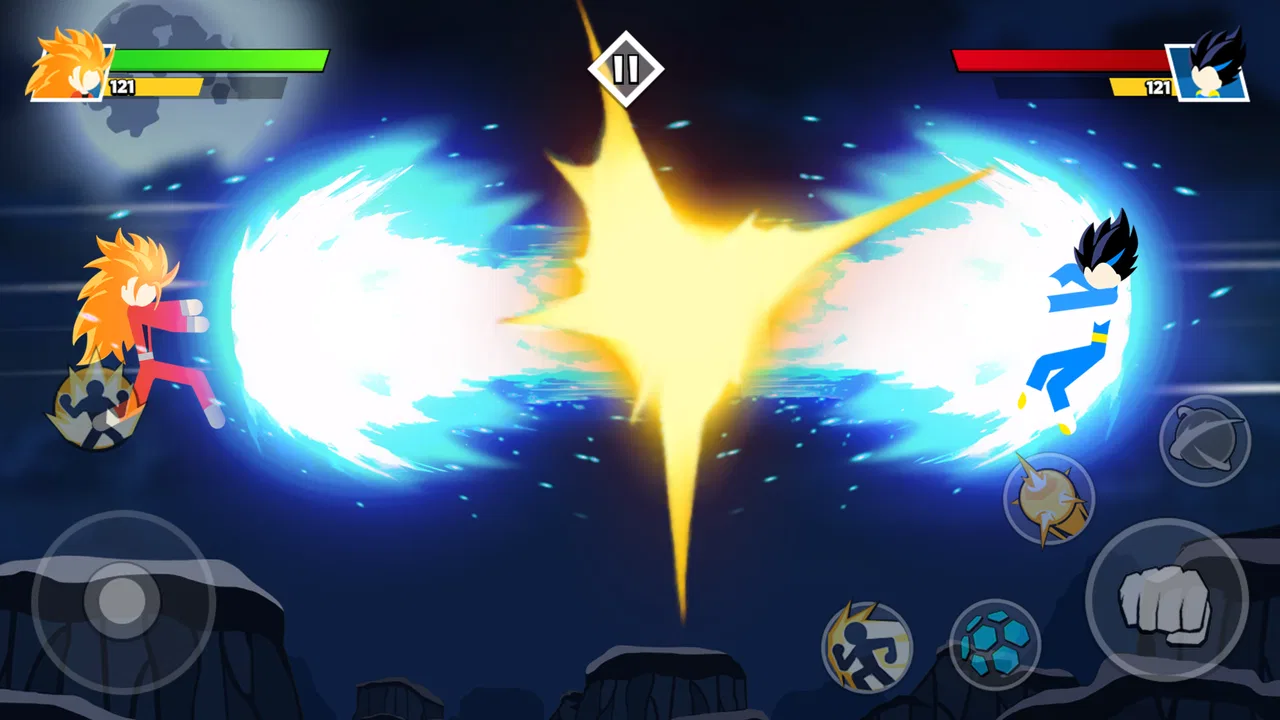
My first impression was that the stick-figure style keeps the action readable. There is no heavy visual clutter competing with the fighters, which matters in a game where timing and quick reactions are more important than decorative detail. The presentation also gives the battles a lighter tone than a fully realistic fighting game, making it suitable for short breaks, casual sessions, or a few attempts before putting the phone away.
You May Also Like

 Blood Strike: 2.5 Anniversary
Blood Strike’s Loadouts Turn Every Drop Into a Tactical Gamble
A close look at Blood Strike’s custom loadouts: how fast access to signature weapons reshapes its battle royale rhythm, rewards preparation, and narrows the gap between fights.

 Pandora - Music & Podcasts
Pandora’s Music Is Easy to Start, but Harder to Recover
Pandora’s strength is its low-effort path from a seed to a station. Its weak spot is how much confidence it asks you to place in connection, setup, and quiet recovery.

 8 Ball Pool
 Is Built on Rivalries, Rematches, and Routine
A close look at the rivalries, rematches, shared routines, and unanswered safety questions that turn a quick pool match into a persistent mobile community.

 Samsung Music
’s Quiet Strength Is Playing What You Already Own
Its reach comes less from spectacle than from dependable access to a personal library. That simplicity is both the app’s strongest retention engine and its ceiling.

 AccuWeather: Weather Radar
AccuWeather Review: A Quick, Clear Forecast for Everyday Decisions
For everyday plans, the best forecast is the one you can understand quickly. AccuWeather makes rain timing, radar, and local conditions easy to act on, with a few trade-offs.

 Hill Climb Racing
Why Hill Climb Racing Still Turns Crashes Into One More Run
A tiny car, a bumpy hill and one more upgrade: Hill Climb Racing keeps resurfacing because its simple chaos makes every near-miss feel personal.
More From Our News Desk



The role-playing influence gives the arcade format a reason to continue. Instead of treating every fight as an isolated burst of action, the game encourages me to think about improvement and the next challenge. That structure is useful for players who enjoy seeing a character become more capable, but it can feel less satisfying to someone who only wants perfectly balanced matches with no progression layer.
A realistic use case is a commute or a short wait at an appointment. I can start with the intention of playing briefly, test myself in a few encounters, and stop without needing to remember a complicated story. That convenience is one of the strongest reasons to try it. It is more immediately accessible than a large role-playing game and more substantial than an arcade title built around one repeated action.
I would not choose it as my main game if I wanted a deep narrative, extensive character dialogue, or a carefully structured competitive scene. Its appeal is narrower and clearer: quick stick-figure battles supported by a progression-oriented arcade experience. Knowing that distinction before installing it helps avoid expecting something closer to a console-style role-playing adventure.
How to approach progression without wasting effort
The best way to play is to treat each attempt as practice rather than rushing toward the strongest possible fighter. I pay attention to which attacks leave me exposed and which moments invite a counterattack. That approach is more useful than simply repeating the same input pattern, because arcade combat usually punishes habits once opponents become less forgiving.
One practical tip is to separate two goals during a session. In one attempt, I concentrate on surviving and learning the rhythm of an encounter. In another, I try to push for a faster or cleaner result. Mixing those goals can make a difficult stage feel unfair when the real problem is that I am experimenting and chasing progress at the same time.
Another useful habit is to stop after a frustrating run instead of immediately spending resources or making a rushed decision. A short break often reveals that the issue was timing rather than a genuinely weak fighter. This is especially important in a progression game, where the desire to improve quickly can make optional spending feel more urgent than it really is.
The game is free to download, but purchases are available from $1.99 to $99.99 per item. That range is important context for anyone deciding how to play. I would begin with a no-spend session and first judge whether the combat itself is enjoyable. If the basic loop does not hold my attention, buying something will not solve that problem.
For families, the Everyone 10+ rating is a useful starting point, although I would still let younger players know that optional purchases exist. The age label makes the game broadly approachable, but it does not replace checking a device’s purchase controls. A child who enjoys improving characters may be more tempted by a shortcut than by a purely cosmetic option, so supervision is sensible even in a light arcade game.
Where spending changes the decision
The purchase range creates a meaningful trade-off. A low-cost item may feel reasonable to someone who has already played enough to know the game suits them, while the highest listed price is a much more serious commitment for a free mobile title. I would not treat the presence of purchases as proof that the game is unfair, because the available facts do not establish how each item affects progress. I would judge every offer by whether it solves a problem I actually have rather than by its presentation.
My personal rule would be simple: play without paying first, set a spending limit before opening the purchase screen, and avoid buying during a losing streak. That workflow protects the enjoyable part of the game from turning into pressure. It also gives me a clearer answer about whether I like the fighting or merely like the idea of progressing faster.
Players often want to know whether paying is necessary. I would not promise that it is unnecessary, because the exact role of every purchase is not established here. What I can say is that the sensible first test is completely free: install it, play several sessions, and see whether the controls and pacing are fun before considering an item. That is a more reliable decision than assuming either that spending is required or that every purchase is harmless.
Fairness, competition, and the limits of what I can judge
Fairness is easier to evaluate in a game with transparent competition, but Stick Warriors Shadow Fight is presented primarily as an arcade experience with role-playing elements. I would therefore focus first on whether the moment-to-moment challenges feel understandable and whether improvement comes from learning as well as from character growth.
I would be cautious about calling it a competitive game in the strict sense. A high score or a difficult encounter can motivate me, but that is different from a clearly defined player-versus-player environment where everyone must meet the same conditions. Without assuming systems that are not confirmed, I would describe the fairness question as one of progression balance: does my skill still matter when my fighter is weaker, and does upgrading make practice feel worthwhile rather than irrelevant?
That distinction helps compare it with usual alternatives. A traditional arcade game normally emphasizes immediate mastery and repeatable challenge, with little reason to spend money on power. A conventional role-playing game usually offers deeper customization, longer-term planning, and more elaborate world-building. This title appears to sit between those approaches, using the quick readability of stick-figure arcade combat while asking the player to care about development over time.
That middle ground will suit some people and frustrate others. I like it when I want a compact game with a sense of direction, but I would choose a purer arcade alternative if I wanted every attempt to depend almost entirely on reflexes. I would choose a larger role-playing game if I wanted story, exploration, or a broader character-building system. The best option depends on whether progression adds motivation or gets in the way of a clean arcade challenge.
A non-obvious trade-off is that simple visuals can improve fairness while also limiting feedback. Clear silhouettes make it easier to see the fighters, yet a minimalist style may provide less visual explanation when an attack fails or a defense does not work as expected. When that happens, I would avoid immediately blaming the game or my character’s strength. I would repeat the situation and check whether my timing, position, or chosen approach was the real cause.
I also recommend treating ratings with the right amount of confidence. The game’s 4.9 average and roughly thirteen thousand ratings are encouraging signs that many players enjoy it, but a rating cannot tell me whether the current balance matches my preferences. Some players love upgrade-driven combat; others dislike any pressure to improve a character before a fight feels comfortable. I would use the strong reception as a reason to try it, not as a guarantee that it will suit everyone.
Who should try it, and who should skip it
I think it is a good fit for someone who enjoys stick-figure action, short arcade sessions, and a light role-playing layer. It also makes sense for players who like having a reason to return after a quick battle. The free entry point removes the need to make a financial decision before understanding the core appeal.
I would recommend skipping it if your priority is a story-heavy adventure, a serious fighting simulator, or a competitive environment with clearly equalized fighters. I would also be careful if you dislike any game that presents optional purchases while you are trying to advance. The available purchase range means spending can become a meaningful part of the decision, even though the exact effect of each item should be checked in the game before buying.
Another group that may want to look elsewhere is players who need extensive accessibility controls or detailed explanations of every mechanic. I cannot assume which options the game includes, so anyone with a specific control or accessibility requirement should verify that before relying on it. For a casual player with ordinary expectations, the straightforward stick-figure presentation is likely to be easier to approach.
What remains important to check before spending
The biggest unknown for me is not whether the game is popular, but how its progression feels over a longer period. A strong first session can show that the combat is appealing, while only continued play reveals whether upgrades remain meaningful or whether the routine becomes repetitive. I would make that judgment personally rather than treating the install count as evidence of long-term variety.
I would also check the exact description of any item before confirming a purchase. The listed range tells me the financial scale, but not the individual contents or how they influence play. That is a reason to read carefully, not a reason to assume the worst. If an offer is unclear, I would close it and continue playing until I understand what I would receive.
The version number, 4.3, tells me which release is currently identified, but it does not by itself explain every change or guarantee that the experience will be identical on every device. Since the minimum requirement is Android 8.0, owners of older phones should not expect installation through unsupported software. On a compatible device, I would still give the game a short trial before deciding whether it deserves regular space on my home screen.
Those checks answer the practical questions I would have as a new player: can I try it without paying, is my phone supported, what should I expect from the style, and when should I be cautious? The answers point toward a low-risk trial, provided I keep purchases deliberate and do not confuse popularity with a promise of personal enjoyment.
My trust verdict after weighing the trade-offs
My overall view is positive but measured. Stick Warriors Shadow Fight has a clear identity: accessible arcade combat presented through stick figures, with enough role-playing flavor to make improvement matter. That combination is more interesting to me than a completely disposable arcade game, while remaining much easier to pick up than a large role-playing title.
The free price makes trying it straightforward, and the broad audience rating supports its position as a casual option. At the same time, the purchase range means I would keep my expectations and budget under control. The fairest way to approach it is to judge the combat before judging the shop. If the battles are enjoyable without spending, optional purchases become a personal choice rather than an entry requirement.
I would install it for short, repeatable sessions and use the early playtime to learn the combat rhythm instead of chasing upgrades immediately. I would compare it with a pure arcade game if I wanted cleaner skill-based repetition, and with a deeper role-playing game if I wanted story or extensive customization. For the right player, this title occupies a useful middle space.
LeeNgooc’s game is therefore worth trying, especially for fans of stick-figure arcade fighting who enjoy gradual character development. I would not call it the universal choice for mobile action, and I would not spend automatically because an offer appears. But as a free starting point with a strong player reception and a distinctive arcade role-playing blend, Stick Warriors Shadow Fight earns a cautious recommendation: try the core battles first, learn what actually improves your play, and keep every purchase intentional.
FAQs for Stick Warriors Shadow Fight
01What is Stick Warriors Shadow Fight about?
Stick Warriors Shadow Fight is an action-packed fighting game where players engage in epic battles with stickman characters. The game features a variety of unique warriors, each with special abilities and skills. With its intuitive controls and dynamic combat system, players can enjoy fast-paced battles in different challenging environments.
02Is Stick Warriors Shadow Fight free to play?
Yes, Stick Warriors Shadow Fight is free to download and play. However, it offers in-app purchases for players who want to enhance their experience with additional characters, skills, or customization options. These purchases are optional and not necessary to enjoy the core gameplay.
03What are the main features of Stick Warriors Shadow Fight?
The game offers several exciting features, including a wide range of stickman characters, each with unique fighting styles and abilities. It also includes various game modes, from single-player campaigns to multiplayer battles. The graphics are simple yet engaging, and the controls are designed to be user-friendly, making it accessible for players of all skill levels.
04Can I play Stick Warriors Shadow Fight offline?
Stick Warriors Shadow Fight can be played offline, allowing players to enjoy the game without an internet connection. This is especially useful for players who want to practice their skills or progress through the single-player campaign without relying on a stable internet connection.
05What devices are compatible with Stick Warriors Shadow Fight?
Stick Warriors Shadow Fight is available for both Android and iOS devices. It supports a wide range of smartphones and tablets, ensuring that players can enjoy the game on most modern devices. It's recommended to check the app store listing for specific device requirements to ensure compatibility.
Pros
- Smooth and intuitive controls.
- Vibrant and engaging graphics.
- Variety of characters and skills.
- Regular updates with new features.
- Low system requirements.
Cons
- Occasional in-app purchase prompts.
- Some ads can be intrusive.
- Limited offline play options.
- Repetitive background music.
- Multiplayer mode needs improvement.

Stick Warriors Shadow Fight
Gallery